
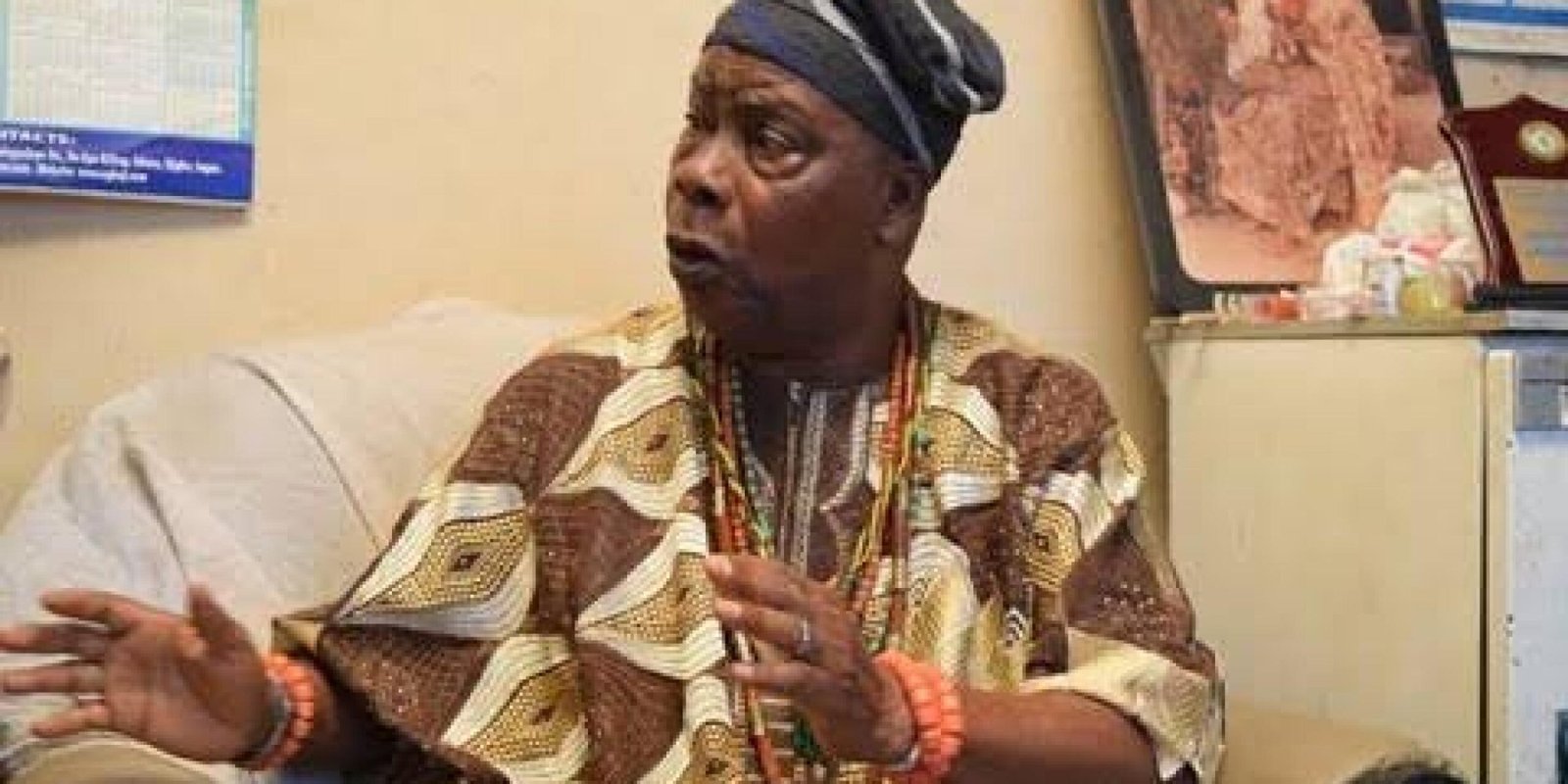
A traditional priest and self-acclaimed seer, HRM Augustine Bola Adegunloye, popularly known as Egbeji Ologun, stirred public debate after issuing a strong warning to former Lagos State Governor and then-national leader of the All Progressives Congress (APC), Bola Ahmed Tinubu, over his reported presidential ambition ahead of the 2023 general elections.
In a video that gained widespread attention on social media, Adegunloye cautioned Tinubu against pursuing Nigeria’s highest political office, claiming that doing so could lead to consequences similar to those experienced by the late Chief Moshood Kashimawo Olawale (MKO) Abiola, the presumed winner of the annulled June 12, 1993 presidential election.
The traditional priest alleged that he had once warned Abiola against contesting for the presidency in 1993 but that the late businessman and politician ignored his advice. According to him, the outcome of Abiola’s political journey serves as a lesson for contemporary politicians seeking power at the highest level.
Speaking in the viral video, Adegunloye expressed concerns over what he described as the dangers surrounding Tinubu’s political aspirations. He claimed that the former governor should carefully reassess his plans and avoid decisions that could place his life and political future at risk. The seer further suggested that many individuals around influential politicians often pursue personal interests rather than offering sincere counsel.
The priest also reflected on his alleged encounter with MKO Abiola decades earlier. He recounted visiting the late business mogul to advise him against seeking the presidency, arguing that Abiola had already achieved significant success and influence in his lifetime. According to Adegunloye, Abiola dismissed the warning and proceeded with his political ambitions.
Abiola’s political story remains one of the most significant chapters in Nigeria’s democratic history. Widely believed to have won the June 12, 1993 presidential election, Abiola never assumed office following the annulment of the election by the military government. He was later detained and died in custody in 1998, an event that continues to shape political discussions in Nigeria.
Drawing parallels between the two political figures, Adegunloye claimed that Tinubu could face a similar fate if he failed to reconsider his political ambitions. He warned that the consequences could include imprisonment and other unfortunate outcomes, though he provided no evidence to support his predictions.
The remarks quickly generated mixed reactions among Nigerians, with some viewing them as a spiritual warning while others dismissed them as personal opinions without any factual basis. Political analysts noted that prophetic declarations and predictions have long been part of Nigeria’s political landscape, especially during election periods when public interest in leadership transitions is at its peak.
At the time the warning was issued, discussions about the 2023 presidential race were gaining momentum across the country. Tinubu had not yet formally declared his intention to contest, but speculation regarding his ambition had dominated political conversations within and outside the ruling APC.
Observers also pointed out that Nigerian politics has frequently witnessed predictions from religious and traditional figures, many of which have generated controversy and public debate. While some citizens place significance on such pronouncements, others maintain that political outcomes are determined by democratic processes rather than prophecies.
The warning by Adegunloye added another layer to the growing discourse surrounding the future of Nigeria’s leadership ahead of the 2023 elections. Whether viewed as a spiritual message, political commentary, or personal opinion, the statement succeeded in attracting national attention and reigniting discussions about the legacy of MKO Abiola and the risks associated with political ambition in Nigeria.
As events later unfolded, Tinubu went on to contest the presidential election and eventually emerged as Nigeria’s President, demonstrating how political predictions often remain subjects of public interpretation and debate.

Love the local vibe of this site. It feels tailored for us and the customer support is actually helpful. Glad I found phauronplay.
[7260]Pasukanjitu: Login Resmi & Slot Gacor Deposit Pulsa Terpercaya,Pasukanjitu menyediakan akses login resmi dengan opsi download apk praktis. Nikmati kemudahan casino deposit pulsa dan panduan cara main baccarat. Daftar sekarang juga! visit: pasukanjitu
The app version is a game changer. I can play anywhere now and the loading times are almost instant. If you want a seamless experience go for magojiliapp
I appreciate the clean layout and the fact that it does not lag. It is very user friendly even for beginners. 80wimapp is doing things right.