
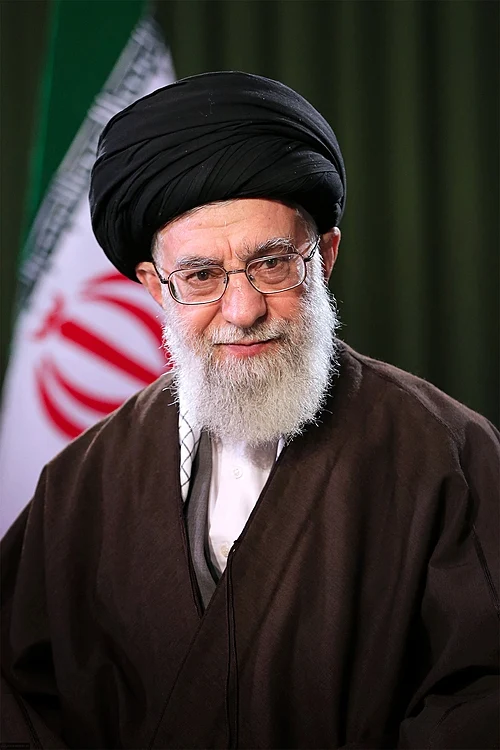
Right now, the world is watching the Middle East with a mixture of disbelief and dread. Airspace across the Gulf has closed intermittently. Missiles have crossed borders. Military bases have been struck. And in a development few imagined possible, Iran’s Supreme Leader, Ali Khamenei, has been killed in coordinated strikes attributed to the United States and Israel.
To treat this as a sudden explosion would be a mistake. What is unfolding did not begin this week, nor this year. It is the product of more than four decades of unresolved hostility that began with a revolution that overturned a monarchy and redrew the political architecture of Iran.
Before 1979, Iran was ruled by Mohammad Reza Pahlavi, the last Shah. His government promoted rapid modernisation, expanding women’s rights, building infrastructure, strengthening ties with Washington and European capitals. Tehran projected an image of sophistication and ambition. Western music played in urban centres. Universities grew. Oil revenues surged.
Yet beneath the surface, discontent hardened. Political opposition was suppressed. The secret police, SAVAK, cultivated fear. Critics were imprisoned. Many Iranians, religious conservatives, leftist students, workers, disagreed sharply with one another, but they shared a grievance: power was concentrated in one palace, and dissent came at a price.
Into that dissatisfaction stepped Ayatollah Ruhollah Khomeini. A cleric exiled first to Turkey, then to Iraq, and later to France, he condemned the Shah’s reforms as an assault on Islamic identity and an invitation to foreign dominance. His sermons, recorded on cassette tapes, found their way back into Iran, played in mosques and private homes. His message fused religion and resistance.
By late 1978, demonstrations filled the streets. Strikes paralysed oil production. Security forces opened fire on protesters. Each funeral became another rally. On 16 January 1979, the Shah left Iran, publicly for a holiday. He never returned.
Khomeini came back two weeks later to a reception that reshaped history. The monarchy collapsed. In March 1979, a referendum asked Iranians whether they wanted an Islamic Republic. Official results declared overwhelming approval. A new order was born.
That order placed ultimate authority not in a king or a parliament, but in a Supreme Leader, a position combining religious oversight with command over the armed forces, judiciary, and key state institutions. The Islamic Revolutionary Guard Corps was established to defend the revolution from internal and external enemies.
Relations with the United States deteriorated almost immediately. When Washington allowed the exiled Shah to enter for medical treatment, revolutionary students stormed the U.S. Embassy in Tehran, holding American diplomats for 444 days. Diplomatic ties ruptured. Distrust calcified.
Khomeini ruled until his death in 1989. His intended successor, Hussein-Ali Montazeri, was sidelined after criticising state executions. Instead, the Assembly of Experts selected Ali Khamenei, then serving as president. Constitutional adjustments enabled his elevation to Supreme Leader.
Few at the time predicted the durability of his tenure. Khamenei consolidated alliances within the Revolutionary Guard and tightened control over the judiciary and media. Presidents came and went reformists, conservatives, pragmatists but none eclipsed the authority of the Supreme Leader.
Sanctions battered the economy over the decades. Inflation climbed. Employment opportunities shrank. Public discontent bubbled up, particularly from 2017 to 2019, as protests against rising fuel costs and economic woes were met with a heavy hand. The 2022 death of Mahsa Amini, who had been detained by the morality police, sparked widespread protests. Women began to take off their headscarves in public.
Security responses were severe. Arrests and executions followed.
Externally tensions with Israel intensified. Israeli officials had consistently stated that Iran would not be allowed to acquire nuclear weapons. Iran, meanwhile, had supported allied forces across the region, digging itself in from Lebanon to Syria. The confrontation often played out in shadow: cyber operations, targeted strikes beyond Iran’s borders, deniable engagements.
The shadow war has now burst into the open.
According to the transcript under examination and corroborating reports, Israeli forces backed by the United States launched extensive strikes against Iranian military installations and command centres. Among the casualties: Ali Khamenei.
His death marks the most dramatic blow to Iran’s leadership structure since 1979. Yet the Islamic Republic was built to survive such shocks. Authority does not vanish with one figure. A provisional leadership mechanism has reportedly assumed control while senior clerics deliberate on succession. The Revolutionary Guard remains intact. State institutions continue to function.
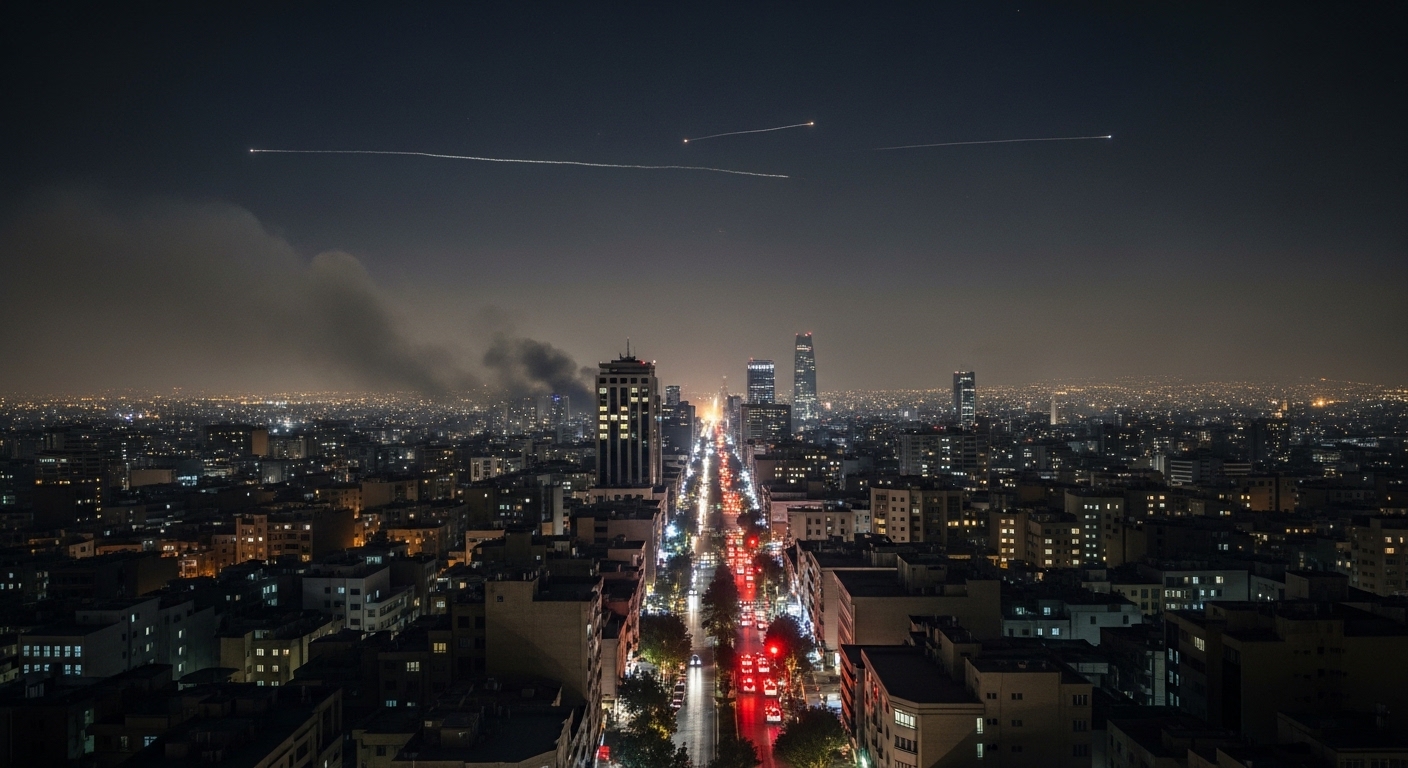
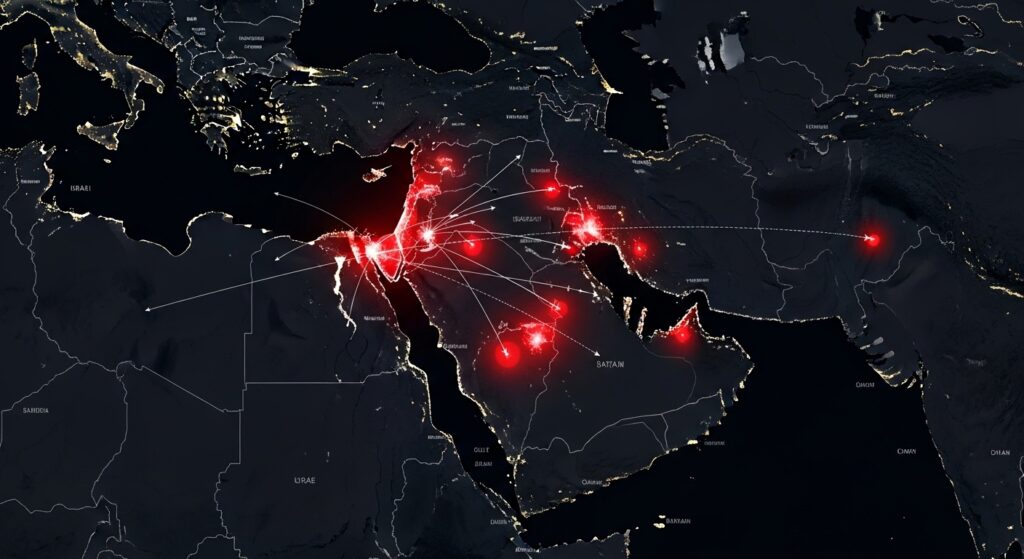
Iran’s retaliation has been swift. Missiles and drones targeted U.S. military facilities across the Gulf region in Bahrain, Kuwait, Qatar, the United Arab Emirates, Saudi Arabia, Iraq, and Jordan. A British installation in Cyprus was reportedly struck. Regional airspace closures disrupted civilian travel. Energy markets trembled.
Whether this escalation becomes a sustained regional war depends on decisions yet to be taken in Tehran, Washington, and Jerusalem. The architecture of alliances from Gulf monarchies to global powers observing from Moscow and Beijing will influence the trajectory.
It is tempting to frame the moment as the beginning of a global conflagration. That description, while emotionally resonant, exceeds current official declarations. No multilateral body has defined the conflict as a world war. Still, the scale of engagement and the direct confrontation between sovereign states distinguish this episode from the proxy battles of previous years.
What is unmistakable is the continuity. The revolution that promised independence from foreign interference inaugurated a system designed to guard ideological sovereignty. That same system entrenched rivalry with Western powers and Israel. Decades of sanctions, covert clashes, and regional competition laid combustible groundwork.
Now the death of a Supreme Leader has forced history to accelerate.
Iran faces the delicate task of selecting a successor while projecting stability. The United States and Israel confront the consequences of a strike that has altered leadership in a pivotal state. Gulf nations must calculate their exposure. Global markets and diplomatic forums brace for aftershocks.
More than forty years ago, millions in Tehran chanted for transformation. Few could have foreseen that the political structure born from that upheaval would one day face its gravest external challenge through the killing of its highest authority.
This is not a rupture detached from the past. It is the latest chapter in a story that began with a revolution, hardened through sanctions and suspicion, and has now erupted into open confrontation. Whatever settlement or escalation follows, it will shape the Middle East’s political landscape and the strategic calculations of world powers, for years to come.
[1035]zbazz Official Login | সেরা অনলাইন ক্যাসিনো বোনাস ও অ্যাপ ডাউনলোড,zbazz এর মাধ্যমে সেরা অনলাইন স্লট গেমের নিয়ম জানুন এবং দ্রুত বিকাশ পেমেন্ট সুবিধা উপভোগ করুন। আজই অ্যাপ ডাউনলোড করে খেলা শুরু করুন। visit: zbazz
[1708]ggqq Official Login | সেরা অনলাইন স্লট ও বিকাশ ডিপোজিট গাইড,ggqq অ্যাপ ডাউনলোড করে সেরা অনলাইন স্লট গেমের অভিজ্ঞতা নিন। বিকাশ দিয়ে দ্রুত ডিপোজিট করুন এবং গাইড অনুসরণ করে আজই জয়েন করুন। visit: ggqq
[9041]Vipganer Casino Online México | Registro, Login y Bonos Slots,Únete a Vipganer, el casino online favorito en México. Regístrate hoy, accede a tu login y aprovecha bonos exclusivos en las mejores slots. ¡Gana con seguridad! visit: vipganer
Really great variety of options available. I spent hours exploring and everything is just seamless. pkbnb55 is absolutely legit.
I’ve been playing here for a while and the payouts are surprisingly fast. Definitely one of my favorite spots lately. Check out bb444
Best experience so far! The bonuses are actually fair and the withdrawal process is smooth as butter. Highly recommend for anyone looking for a reliable site. pkbaji888
The app version is a game changer! I can play anywhere and it doesn’t lag at all. So glad I downloaded jilidayapp.