

A Federal High Court sitting in Abuja has sentenced four men to death by hanging for their roles in the deadly 2022 attack on St. Francis Catholic Church, Owo, Ondo State, bringing a major phase of the long-running terrorism trial to a decisive close.
The judgment, delivered on Wednesday by Justice Emeka Nwite, followed months of proceedings, witness testimonies, and final written addresses presented by both the prosecution and defence teams. The court found the defendants guilty on a nine-count charge bordering on terrorism, conspiracy, and mass killing linked to the June 5, 2022 church attack that shocked the nation.
The convicted persons are Idris Abdulmalik Omeiza (25), Al Qasim Idris (20), Jamiu Abdulmalik (26), and Abdulhaleem Idris (25). The court ordered that each of them be executed by hanging after determining that the prosecution had successfully proven their involvement in the coordinated assault on worshippers during Sunday Mass.
A fifth defendant, Momoh Otuho Abubakar (47), was discharged and acquitted. The court held that the Department of State Services (DSS), which prosecuted the case on behalf of the Federal Government, failed to establish sufficient evidence linking him directly to the planning or execution of the attack.
Background to the Attack
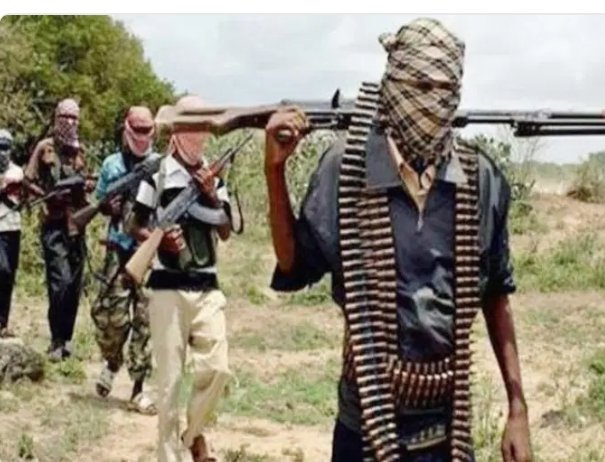
The incident dates back to June 5, 2022, when armed men stormed St. Francis Catholic Church in Owo during a Pentecost service. Worshippers had gathered for Sunday Mass when the attackers struck, unleashing violence that left more than 40 people dead and over 100 others injured.
The attack, described by survivors and authorities as one of the most brutal assaults on a place of worship in Nigeria’s recent history, triggered nationwide outrage and condemnation from religious leaders, government officials, and international observers. Emergency responders and residents were later confronted with scenes of devastation inside and outside the church premises.
Court Proceedings and Evidence
During the trial, the DSS presented multiple witnesses, including security operatives and survivors of the attack, who narrated how the assailants invaded the church and opened fire on congregants. Some witnesses also described how explosives were used during the operation, intensifying the scale of casualties and destruction.
The prosecution maintained that the attack was carefully planned and executed by a coordinated network of militants who had received logistical support prior to the incident. According to the DSS, the accused persons were linked to an organized terror cell and participated in the operational planning that led to the massacre.
Throughout the proceedings, the defendants pleaded not guilty, with their legal representatives arguing that the prosecution failed to conclusively tie them to the scene of the crime. However, the court rejected these arguments in its final ruling, stating that the weight of evidence presented was sufficient to establish guilt beyond reasonable doubt.
Judgment and Sentencing
Delivering the judgment, Justice Nwite stated that the court carefully evaluated all exhibits, testimonies, and written submissions before arriving at its decision. He noted that the gravity of the offence, which involved the deliberate killing of unarmed worshippers, left the court with no alternative but to impose the maximum penalty allowed under the law for those found guilty.
The ruling was met with mixed reactions inside and outside the courtroom, with legal observers describing it as one of the most significant terrorism convictions in recent years. Security presence around the court premises was also reportedly heightened during the delivery of judgment.
National Impact of the Owo Church Attack
The Owo church massacre remains one of the darkest moments in Nigeria’s recent security history. Beyond the immediate loss of lives, the attack deepened national concerns about the vulnerability of public spaces, especially places of worship, to armed violence.
In the aftermath of the 2022 incident, government agencies intensified security operations across parts of the Southwest, while investigations were launched to identify those responsible. The case eventually became one of the most closely watched terrorism trials in the country.
With Wednesday’s ruling, the Federal High Court has delivered what many consider a landmark judgment in Nigeria’s fight against terrorism. While four of the accused now face the ultimate punishment under the law, one defendant walked free after being cleared of all charges.
The judgment closes a significant chapter in the legal response to the Owo church attack, though the emotional and psychological scars left on victims, families, and the wider community remain deeply felt across the country.
Really impressed with the customer support and the variety of games available. Everything feels very secure and professional. Give x666lcd a go if you want a quality gaming spot.
As a Filipino player looking for a reliable platform I am really impressed with what this site offers. The game variety is excellent and customer support speaks my language perfectly. Cashouts are processed fast and I trust them completely. idceri188
I’ve tried a few different sites recently but this one feels the most secure. The customer support is also quite responsive which gives me peace of mind while using vnc188.
[4534]Sxt4 | Link vào tải app game bài đổi thưởng Momo uy tín,Truy cập sxt4 để trải nghiệm nổ hũ jackpot uy tín và game bài đổi thưởng qua Momo. Hướng dẫn cách chơi baccarat cho người mới chi tiết. Đăng ký chơi ngay! visit: sxt4