
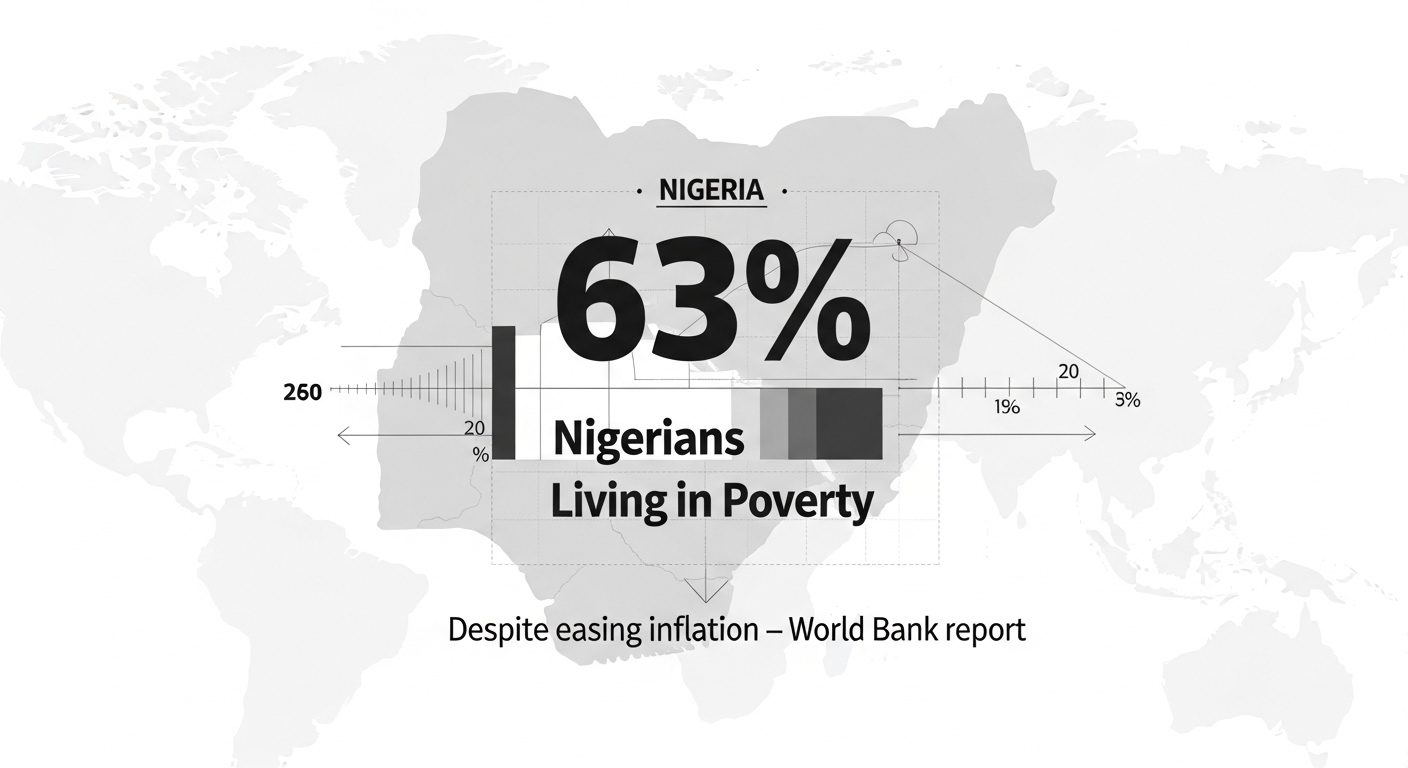
Nigeria’s poverty burden intensified in 2025, with nearly two-thirds of the population now living below the national poverty line, even as headline inflation showed signs of easing, according to a new World Bank assessment.
In the Nigeria Development Update (April 2026) titled Nigeria’s Tomorrow Must Start Today: The Case for Early Childhood Development and unveiled in Abuja, the global lender revealed that the share of Nigerians classified as poor climbed from 56% in 2023 and 61% in 2024 to 63% last year. That translates to roughly 140 million citizens struggling with economic hardship.
The report shows the rise in poverty occurred despite a significant moderation in inflation over the same period. Data from Nigeria’s statistics agency indicated that headline inflation tumbled from around 34.8% in December 2024 to about 15.15% in December 2025, while food inflation dropped sharply.
However, the World Bank noted that the pace of income growth has failed to keep ahead of still-elevated price pressures, leaving households with eroded purchasing power and limited gains in real living standards. “Household incomes have not grown fast enough to offset still-elevated inflation, and poverty has yet to begin declining,” the report stated.
The persistence of high poverty levels reflects both the lingering effects of earlier inflation spikes and broader structural constraints in the economy. The Bank highlighted that while services and industry sectors have driven growth, agriculture, which employs the majority of the poor has lagged, limiting meaningful income improvements for millions.
Looking ahead, the World Bank projects a gradual easing of poverty from 2026 onwards as price pressures continue to moderate and macroeconomic conditions improve. However, the pace of progress is expected to remain slow unless growth becomes more inclusive, with stronger job creation, higher agricultural productivity, and support for human capital development.
Global disruptions, including geopolitical tensions that have pushed up energy and food costs, have compounded challenges for vulnerable households.


[3882]bd222 Official Login | সেরা অনলাইন ক্যাসিনো বোনাস ও স্লট গেম,bd222-এ আজই যোগ দিন এবং আকর্ষণীয় বোনাস উপভোগ করুন। দ্রুত টাকা উত্তোলন পদ্ধতি ও সহজ অ্যাপ ডাউনলোডের সুবিধা নিয়ে আমরা আছি আপনার পাশে। এখনই শুরু করুন। visit: bd222
[3979]Gacorzone: Login Resmi & Situs Slot Deposit Dana Terpercaya,Gacorzone menyediakan link alternatif casino terpercaya dan opsi download apk untuk akses mudah. Nikmati kemudahan deposit via Dana dan daftar sekarang juga. visit: gacorzone
[6925]gb444 Official Login – সেরা অনলাইন ক্যাসিনো ও দ্রুত বিকাশ পেমেন্ট,gb444 অ্যাপ ডাউনলোড করে সেরা অনলাইন ক্যাসিনো গেমসের অভিজ্ঞতা নিন। দ্রুত বিকাশ পেমেন্ট এবং সহজ স্লট গেম খেলার নিয়ম জানতে আজই জয়েন করুন। visit: gb444
Best experience I’ve had in a while. The customer support is helpful and the bonuses are actually worth it. Give phokjili a shot and see for yourself.
Really impressed with the security and the way they handle transactions. Everything feels safe and professional at kratonbetkr.
[3012]Soul777: অনলাইন ক্যাসিনো সাইট – লগইন,অনলাইনে ক্যাসিনো গেম খেলার জন্য বাংলাদেশি খেলোয়াড়দের পছন্দের সাইট Soul777। এখানে সাইন ইন বা রেজিস্টার করুন, অ্যাপ ডাউনলোড করুন এবং প্রমোশন ও ভিআইপি তথ্য দেখে নিন। visit: soul777
The login process is super quick and the games are top notch. Had a great run last night and won big. Highly recommend 178jililogin