
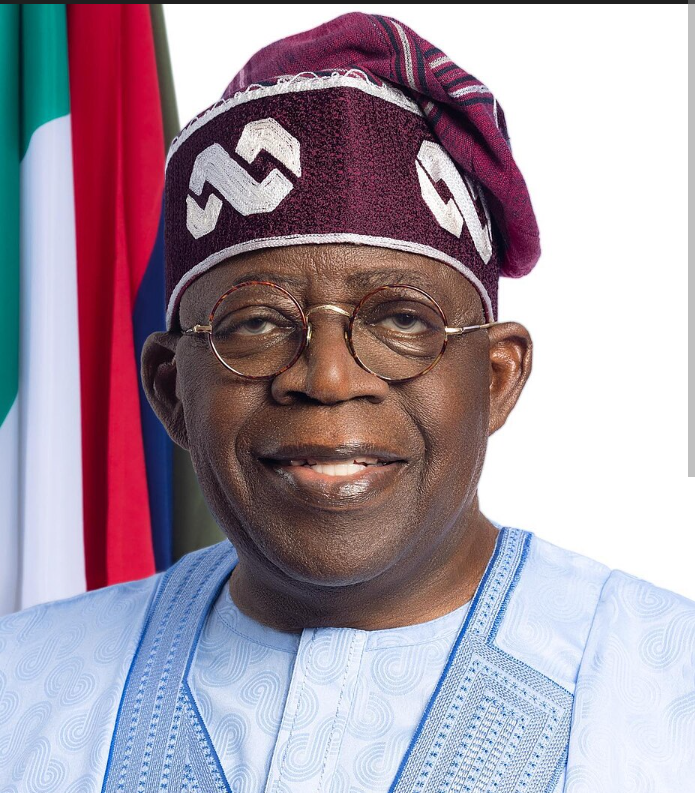
Tax reforms rarely attract applause anywhere in the world, and Nigeria is no exception. When citizens hear the word “tax,” what often follows is suspicion, rooted not in ignorance, but in lived experience. For decades, Nigerians have paid taxes without seeing any form of returns in terms of adequate infrastructure, healthcare, education, or security. This history explains why President Bola Ahmed Tinubu’s sweeping tax reform agenda has generated intense public anxiety, even as government officials insist it is designed to reduce hardship, not deepen it.
At the center of the reform is a politically sensitive idea: reduce tax rates while expanding the tax net. On paper, this sounds reasonable, even progressive. In practice, however, it raises a more difficult question for Nigerians, not whether the reform makes economic sense, but whether it can be trusted to work in the public interest.
One of the strongest arguments in favour of the reform is its attempt to correct long-standing distortions in Nigeria’s tax system. For years, a small group of salaried employees and registered taxpayers have carried the burden of tax responsibility, while a far larger economy operates outside the system. The government has struggled to balance its books due to low revenue and increased borrowing. Tinubu’s strategy attempts to correct this by incorporating more economic activity into the tax system, not by further burdening those already overtaxed, but by legalizing income sources that have previously evaded regulation.
There are specific reliefs that have been cited as worthy of attention. The exemption of low-income earners from personal income tax is one notable change, especially in a country where the minimum wage is hardly sufficient to sustain a livelihood. Small businesses, which are the backbone of the Nigerian economy, will also be well placed to benefit from these changes. The relief will be a welcome respite for millions of people who are currently struggling to make ends meet.
Yet policy design is only half the story. The real battleground lies in implementation and public confidence. Nigerians are not wrong to worry. In the past, good policies have been undermined by poor implementation, selective enforcement, and outright abuse. The perception that the taxman will use the new reforms as a pretext for harassment, arbitrary assessments, and digital abuse is not baseless; there is precedent for this. Hence, the government’s assurances are not enough; trust has to be earned.
Another contentious aspect of the reform is the expansion of taxable income sources, particularly in the digital space. Content creators, freelancers, cryptocurrency traders, and platform-based workers now find themselves clearly within the scope of taxation. From a global point of view, this makes Nigeria compliant with modern economic realities. However, when viewed locally, it raises questions about timing. Many Nigerians have turned to online work not out of choice, but out of necessity, driven by the lack of jobs in the country. Taxing these income sources without providing social benefits will only reinforce the notion that the government is eager to collect but reluctant to give back to the people.
Moreover, the political timing of the reform adds another layer of complexity to the public view about the policy. Currently, the country is undergoing economic challenges, with high levels of inflation and an increasing cost of living. Such economic conditions are considered unfavourable for implementing reforms, even if they offer long-term benefits, as they can be perceived as punitive measures. Some argue that the timing of the reform is wrong, especially when many people are still adjusting to the removal of fuel subsidies and currency fluctuations. The success of the policy will therefore depend on the political sensitivity with which it is implemented.
There is also the unresolved issue of accountability. Taxation is not merely a financial obligation; it is a social contract. Citizens pay because they expect governance in return. Roads, hospitals, schools, security, and social welfare are not privileges; they are the justification for taxation. Without visible improvement in these areas, any attempt to widen the tax net will be interpreted as extraction rather than partnership. Tinubu’s administration must therefore recognise that tax reform without service reform is a recipe for resistance.
That said, rejecting the reform outright would be short-sighted. Nigeria’s revenue challenges are real and urgent. A country of over 200 million people cannot sustainably function on oil receipts and debt alone. Expanding the tax base is unavoidable if Nigeria hopes to fund development without mortgaging its future. The real debate, therefore, is not whether reform is needed, but whether this reform can be different from those that came before it.
What will make the difference is conduct. Will tax authorities focus on education rather than intimidation? Will enforcement be fair and balanced, or will politically well-connected interests be left alone, while ordinary citizens are targeted? Will revenues generated be traceable to specific public improvements, or will they be lost in the black box of budgets? These are the issues that really matter, not the words of any legislation.
In the coming months, Nigerians will watch closely. Not for press releases or policy papers, but for behaviour. They will judge the reform by how it treats the vulnerable, how it engages the informal sector, and how honestly it accounts for every naira collected. Tinubu’s tax reform stands at a crossroads; it can either mark a turning point toward fiscal responsibility and shared national effort, or reinforce the long-standing belief that taxation in Nigeria is a one-way street.
Ultimately, the reform’s legacy will be written not by economists or lawmakers, but by market traders, salary earners, digital workers, and small business owners, by whether they feel seen, protected, and respected within the system. If the administration understands this and governs accordingly, the reform may yet become a foundation for sustainable growth. If not, it risks becoming another chapter in Nigeria’s long history of missed opportunities.
[2538]ceri188 | Login Resmi Link Alternatif Situs Slot Gacor Terpercaya,ceri188 menyediakan akses login resmi dengan kemudahan deposit pulsa tanpa potongan serta opsi dana untuk judi casino online. Daftar sekarang dan mainkan gamenya. visit: ceri188
Joined this club last week and the experience has been great. The winning rate seems better than other sites. Love krktwin8club!
[3506]1win লগইন ও অ্যাপ ডাউনলোড | বিকাশ দিয়ে ক্যাসিনো ডিপোজিট,1win login করার নিয়ম জানুন এবং অ্যান্ড্রয়েড ক্যাসিনো অ্যাপ ডাউনলোড করে অনলাইন স্লট গেম খেলার নিয়ম শিখুন। আজই জয়েন করুন। visit: 1win
The user experience is top notch and the rewards are generous. I’ve shared this with my friends and we are all having a blast on 777zkapk.
I’ve been looking for a reliable platform like this for a while. The interface is super smooth and everything works perfectly. Definitely giving phjilikkk a try today!
The app version is just fantastic. I can play on the go without any glitches. If you prefer mobile gaming, noblejiliapp is a must have.