
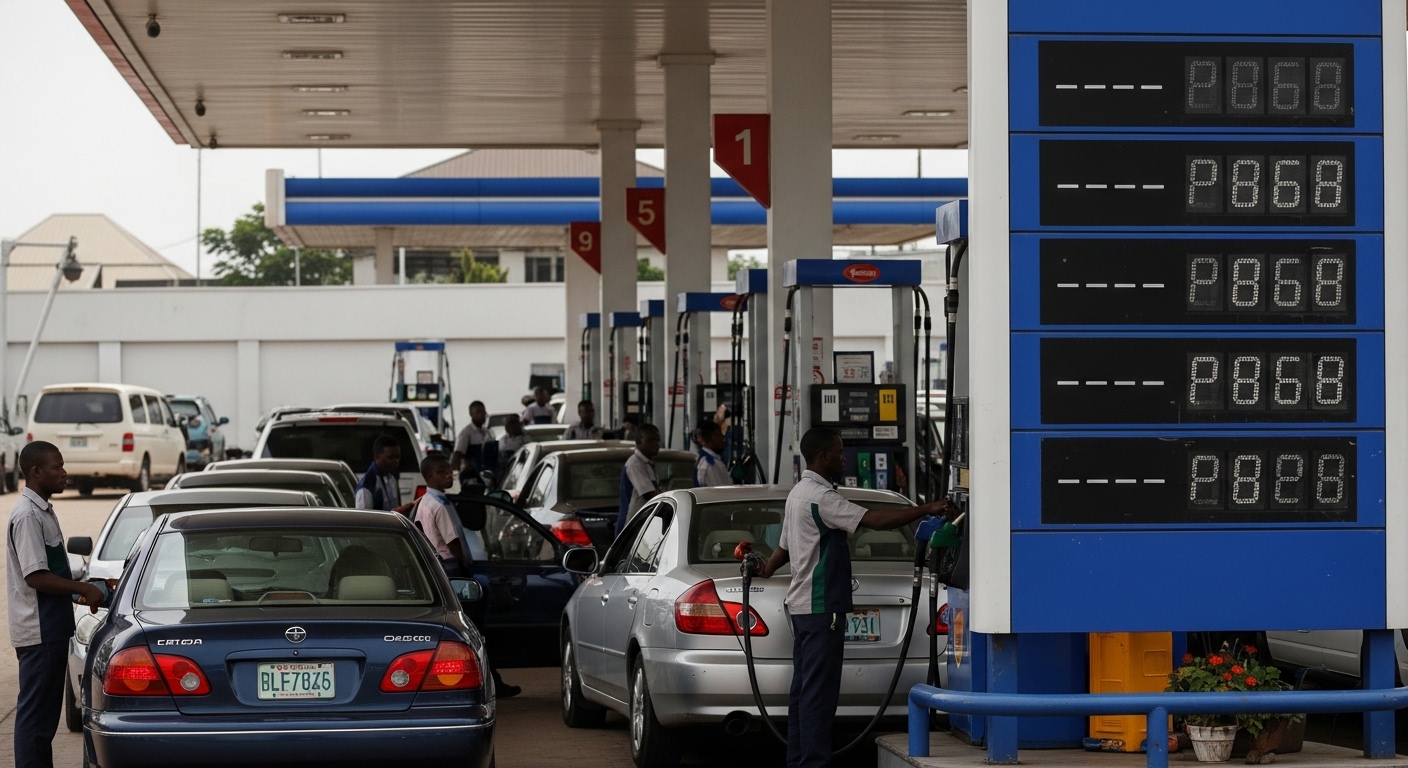
Competition among fuel retailers is intensifying across the Lagos-Ibadan Expressway corridor as filling stations cut petrol prices sharply to lure motorists and keep business flowing.
At the SGR Filling Station in the Mowe axis, the price of Premium Motor Spirit (PMS), commonly called petrol, was reduced to N805 per litre, down from N812 earlier in the week, making it one of the cheapest outlets in the area.
This reduction followed a similar move at a nearby NIPCO outlet in Lotto, which lowered its rate from N828 to N812 per litre in an effort to retain customers. In response, several other stations along the busy expressway adjusted their prices downward to stay competitive.
At Ibafo, Alade Filling Station was selling petrol at N820 per litre, while Habeeb Filling Station maintained its price at N819 per litre. Other outlets, including SAO stations in both Mowe and Lotto, offered fuel at N825 per litre as marketers reacted to shifts in the market.
The pressure to cut prices also affected larger chains. The Dangote-partnered MRS Filling Station at Olowotedo reduced its pump price from N839 to N825 per litre as drivers increasingly favoured stations with lower rates. However, not all locations followed suit, another MRS outlet near the RCCG camp continued selling at N839 per litre even as a neighbouring AP station moved its price down to N834.
Elsewhere, Nigerian National Petroleum Company Limited outlets in Lagos and Ogun were dispensing petrol at between N837 and N840 per litre, with prices depending on specific locations and levels of nearby competition.
The wider price adjustments were partly driven by a recent reduction in the ex-depot price from the Dangote Petroleum Refinery, which cut the gantry price of PMS by N25 per litre, lowering it from N799 to N774 per litre. That move was communicated directly to marketers and took effect immediately, prompting many retailers to reconsider their own rates.
Analysts say the current climate reflects an evolving market where domestic refining and competitive pricing are reshaping consumer behaviour. With multiple stations edging nearer to lower price points, motorists are increasingly able to shop around for the best rates, a shift that is easing the cost burden of petrol on ordinary Nigerians.
However, some industry watchers caution that persistent price cuts could squeeze margins for retailers, potentially prompting calls for regulatory intervention if the trend continues unchecked.
Finding a reliable source for the app was hard until I found this site. Installation was a breeze. Go to aajilidownload to get started.
[108]Ladbrokes অ্যাকাউন্ট খোলা এবং বিকাশ পেমেন্ট ক্যাসিনো গাইড,ladbrokes অ্যাকাউন্ট খোলা এবং অ্যাপ ডাউনলোড করুন সহজেই। বিকাশ দিয়ে অনলাইন ক্যাসিনো পেমেন্ট ও লাইভ ডিলারের স্লট গেম উপভোগ করতে আজই জয়েন করুন। visit: ladbrokes
Finally found a site that doesn’t lag. The registration was a breeze and I started playing in minutes. Keep it up! phplus777link
The odds here are surprisingly competitive compared to other sites I’ve used. I love the layout of phi8ph, it makes betting so much easier.